Over the last five years, I’ve been incredibly fortunate to travel with World Playground to some of the most remarkable places on Earth. I’ve gone on multiple safaris across Africa, swam alongside humpback whales in Tonga, climbed glaciers in Iceland, and indulged in over-the-water luxury in the Maldives just to name a few. With a resume like that, I never expected Egypt to become my favorite destination, or the place I look forward to returning to the most.
Growing up in the Midwest, ancient Egypt never really captured my imagination. My public school education skimmed the surface: a few maps, the usual icons (pyramids, mummies, pharaohs, tombs, gods, hieroglyphs) and a couple of names like King Tutankhamen and Cleopatra. It all felt distant and flattened, like pages in a textbook rather than the remnants of a real, living civilization.
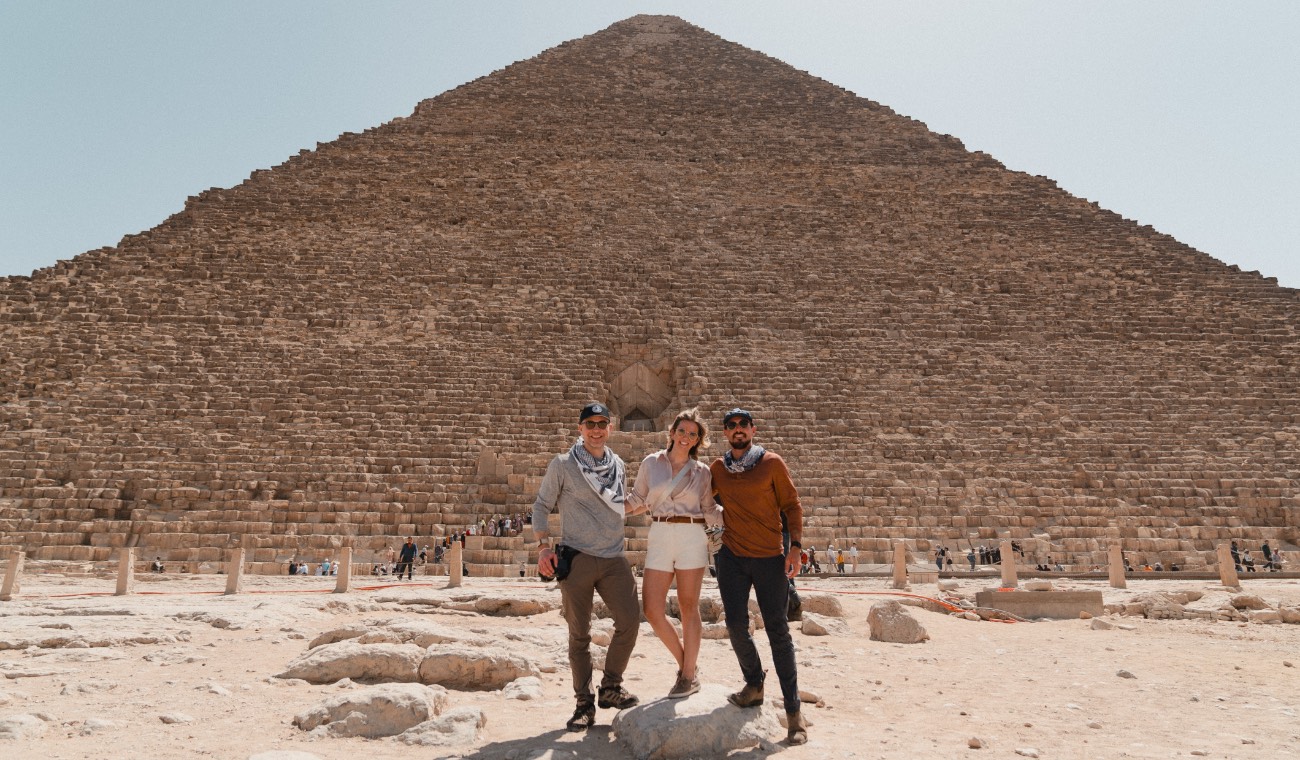
That changed the moment I laid eyes on the Great Pyramids.
Standing there, this didn’t feel like just another bucket-list stop on a World Playground itinerary. It felt like being dropped into a conversation with time itself. The sheer scale of the pyramids, the engineering precision, the human effort required to build them, it all hit me at once. For 4,500 years, people like me have stood in this exact spot, staring up in disbelief. In that moment, I felt both completely insignificant and strangely connected to everyone who had ever been awed by these monuments. It was humbling, disorienting, and deeply moving.
From that point on, I was hooked. I wanted to soak up as much as I could while I was there.
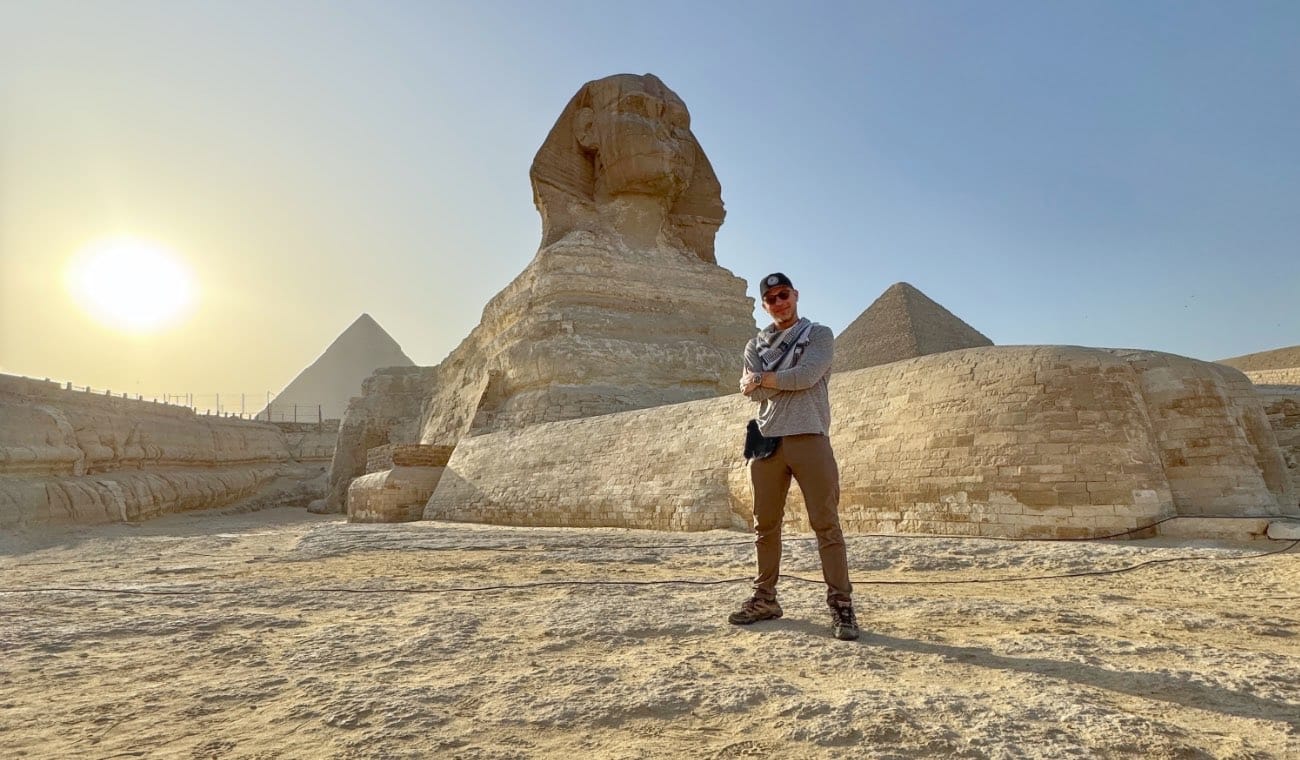
Our journey took us from the museums and pyramids of Cairo down to the Valley of the Kings and the great temples of Karnak and Luxor, and eventually on to Petra in Jordan. In true World Playground fashion—doing the best thing, in the best place, at the best time—we didn’t just show up and shuffle through with the crowds. We arranged a private tour inside the Great Pyramid of Khufu and private access to the Great Sphinx of Giza, where we were given a powerful historical primer by world-renowned Egyptian archaeologist Dr. Zahi Hawass.
The Sphinx sits beside the pyramids at Giza, facing east toward the rising sun. Carved directly from the bedrock, it combines a lion’s body with a human head wearing the royal headdress. The lion signaled strength and kingship, and its location made it a kind of a spiritual guardian for the pyramid complex and the necropolis beyond.
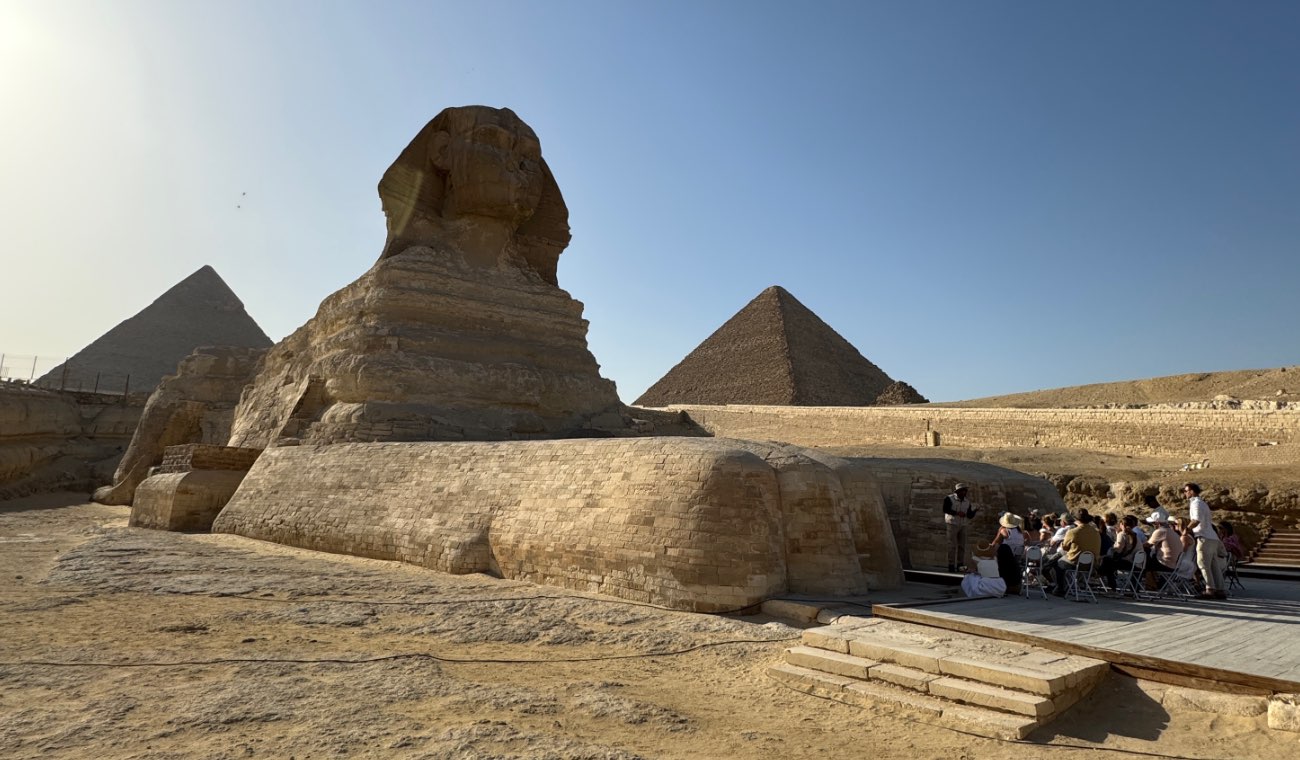
Dr. Hawass explained that the Sphinx stayed important long after the pyramids’ building age ended. We learned that over the centuries, the desert repeatedly buried the Sphinx in sand, and later rulers “rediscovered” and cleared it. Each time they did, they left new monuments and inscriptions that renewed its sacred status. The best‑known example is Thutmose IV who as a young prince, claimed to have fallen asleep by the half‑buried Sphinx and dreamed it spoke to him, promising the throne if he cleared away the sand. After he became king, he commemorated this story on the “Dream Stele” between the Sphinx’s paws. That stele effectively turned the Sphinx into a speaking god who could grant kingship.
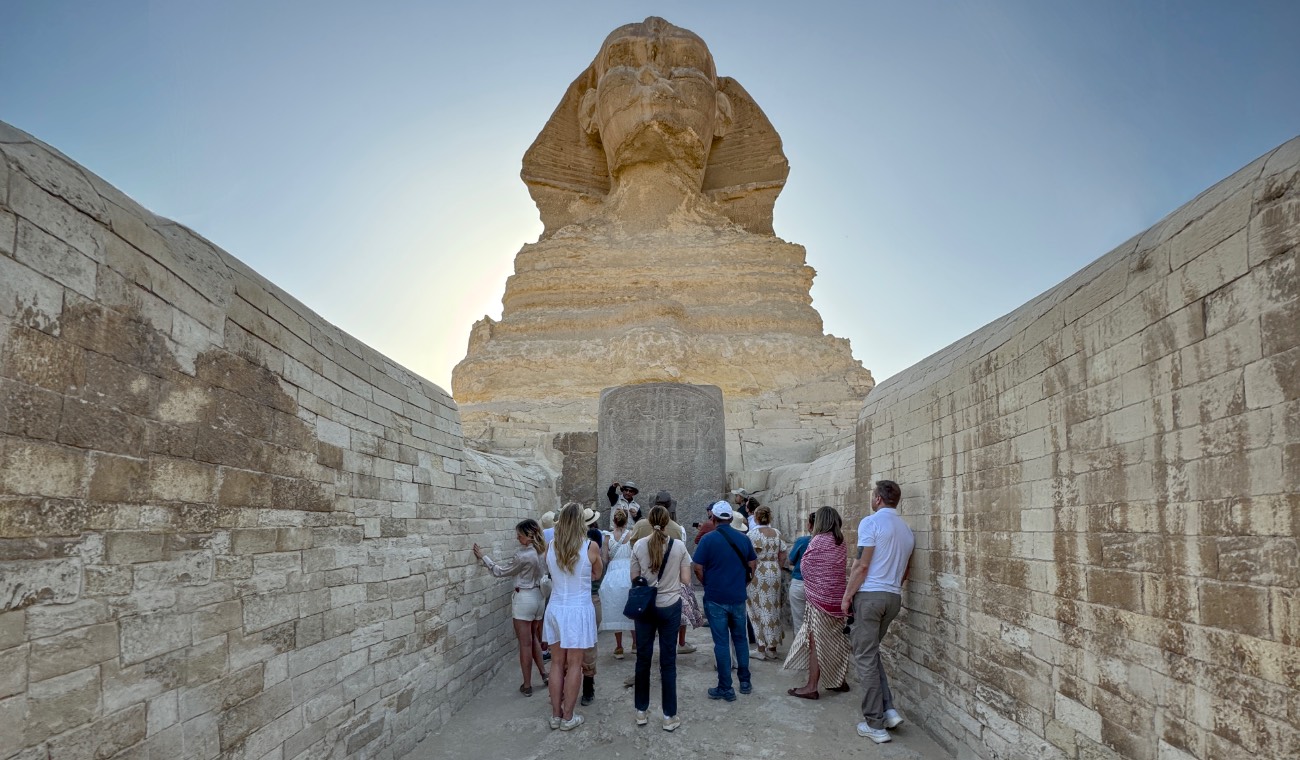
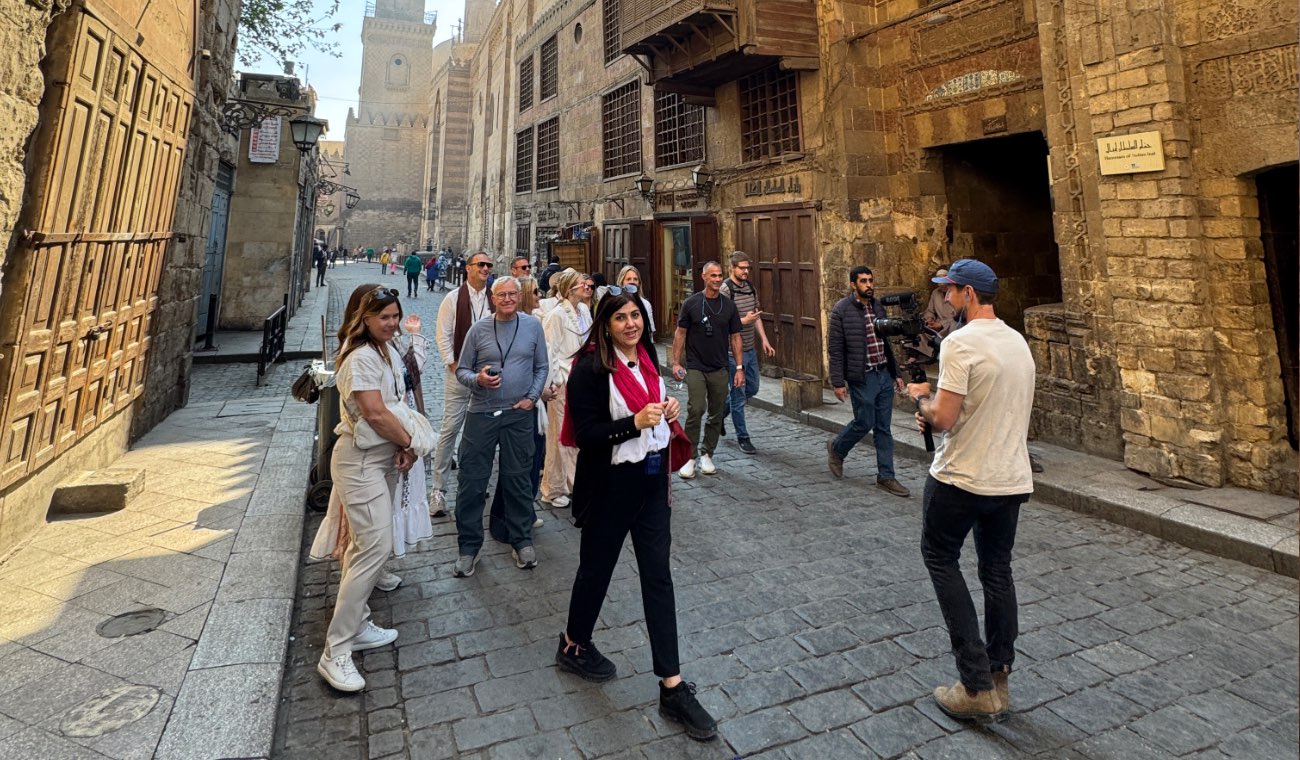
Beyond our time with Dr. Hawass at the Sphinx, we were accompanied in Cairo by two phenomenal Egyptologists, Shereen and Osama. They guided us not just through space, but through time, and quickly became as essential to the experience as the sites themselves. Because of their detailed explanations, we could stay fully present instead of constantly reaching for our phones to search for context.
Shereen and Osama drew our attention to key people, stories, and artifacts that formed a meaningful introduction to Egypt’s Old Kingdom and its civilization—vibrant, complex, and far more enduring than most of us had ever been taught.
Traveling from Cairo to Luxor loosely mirrors the timeline of ancient Egyptian history. First came the Old Kingdom pyramids at Giza and Saqqara, followed much later by the New Kingdom temples of Luxor and Karnak. We were able to experience these sites in a somewhat chronological order which helped tell the story of Egypt and its evolution from pyramids to temples.
Exploring The Valley of the Kings.
After a charter flight from Cairo to Luxor, we took a mesmerizing journey into ancient Egypt's burial traditions in the Valley of the Kings. This area became the royal cemetery for the New Kingdom when pharaohs stopped building pyramids (as they were easy to rob) and instead chose a remote desert valley surrounded by cliffs to hide their tombs.
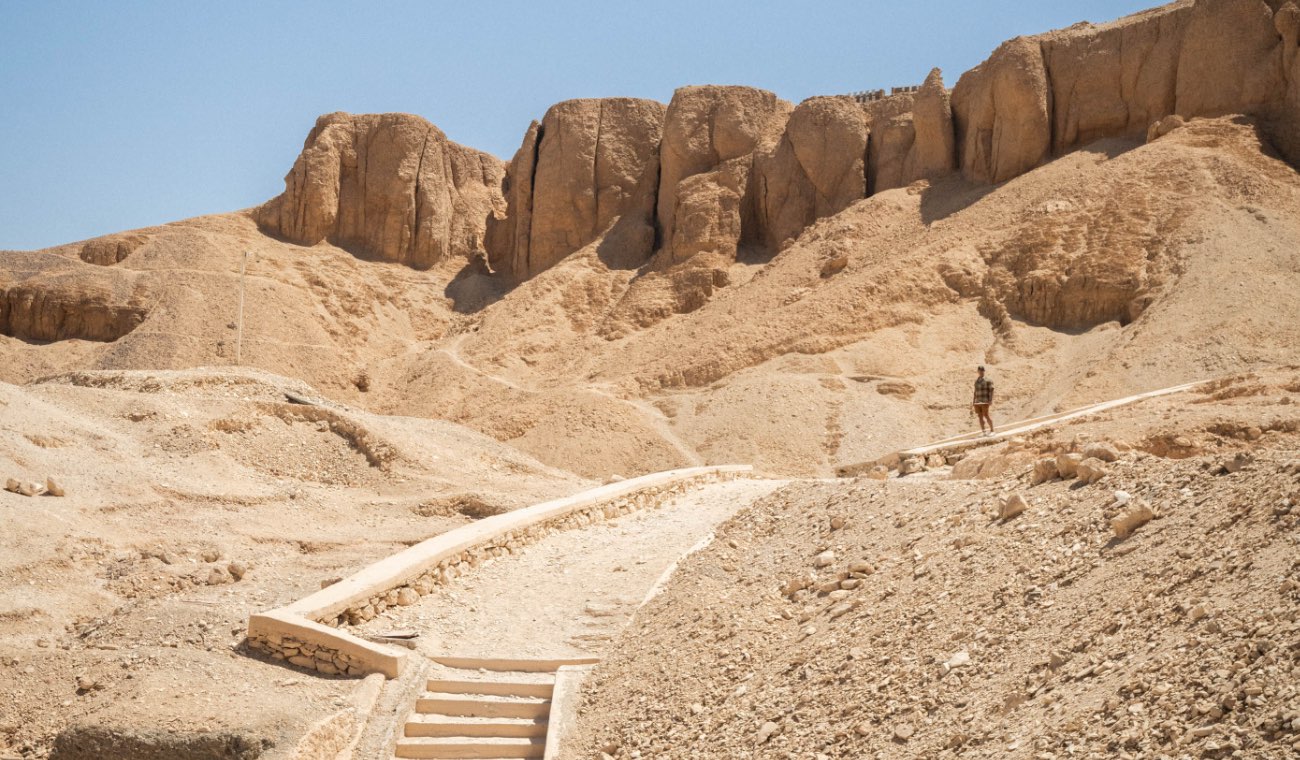
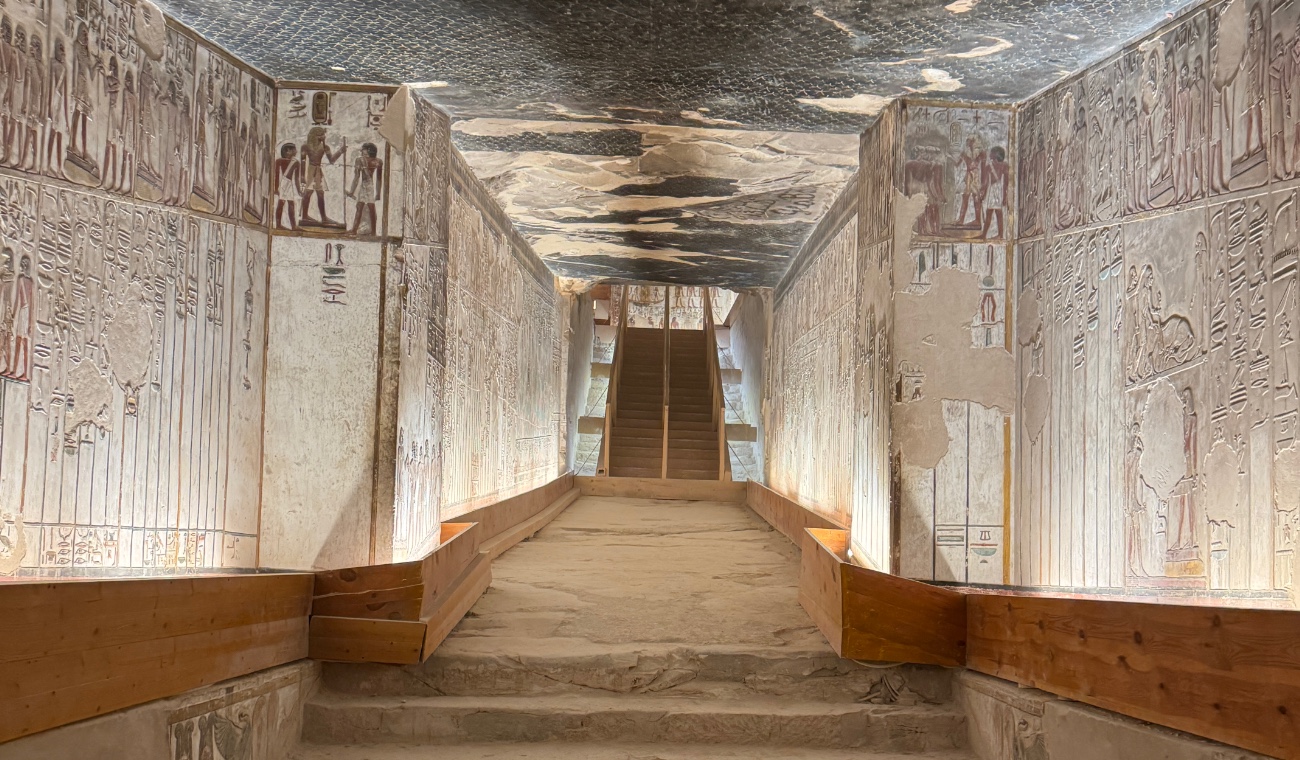
There are around 60 known tombs in the Valley of the Kings and in just a few hours, we were able to visit some of the most famous: Tutankhamun, Ramesses II, and Seti I. Inside, the walls are covered with brilliantly painted scenes from funerary texts like the Book of the Dead. These are not just decorations; they are instructions for the king’s journey through the underworld.
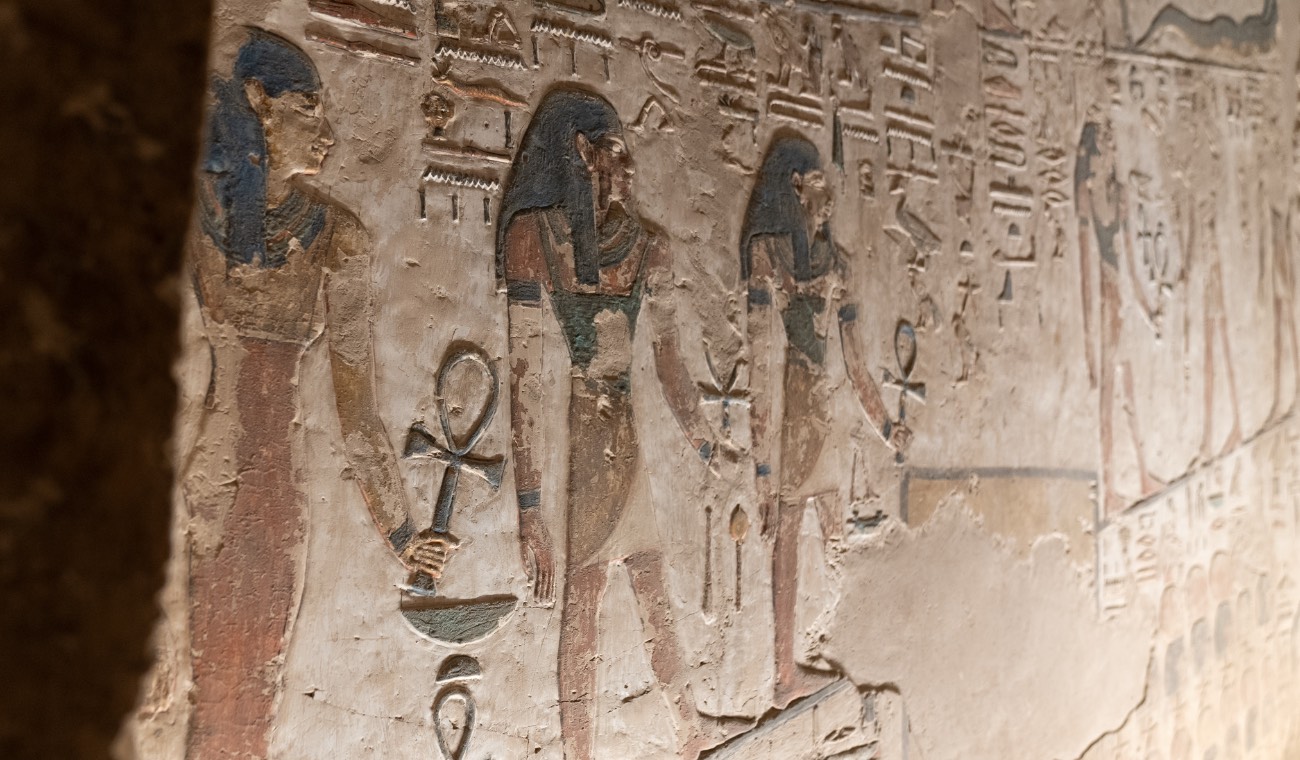
It was striking to see how ornate these tombs are. Our guides explained that the deep carvings and vivid colors are original, more than 3,000 years old, and that active conservation work is underway to clean and stabilize them for future generations.
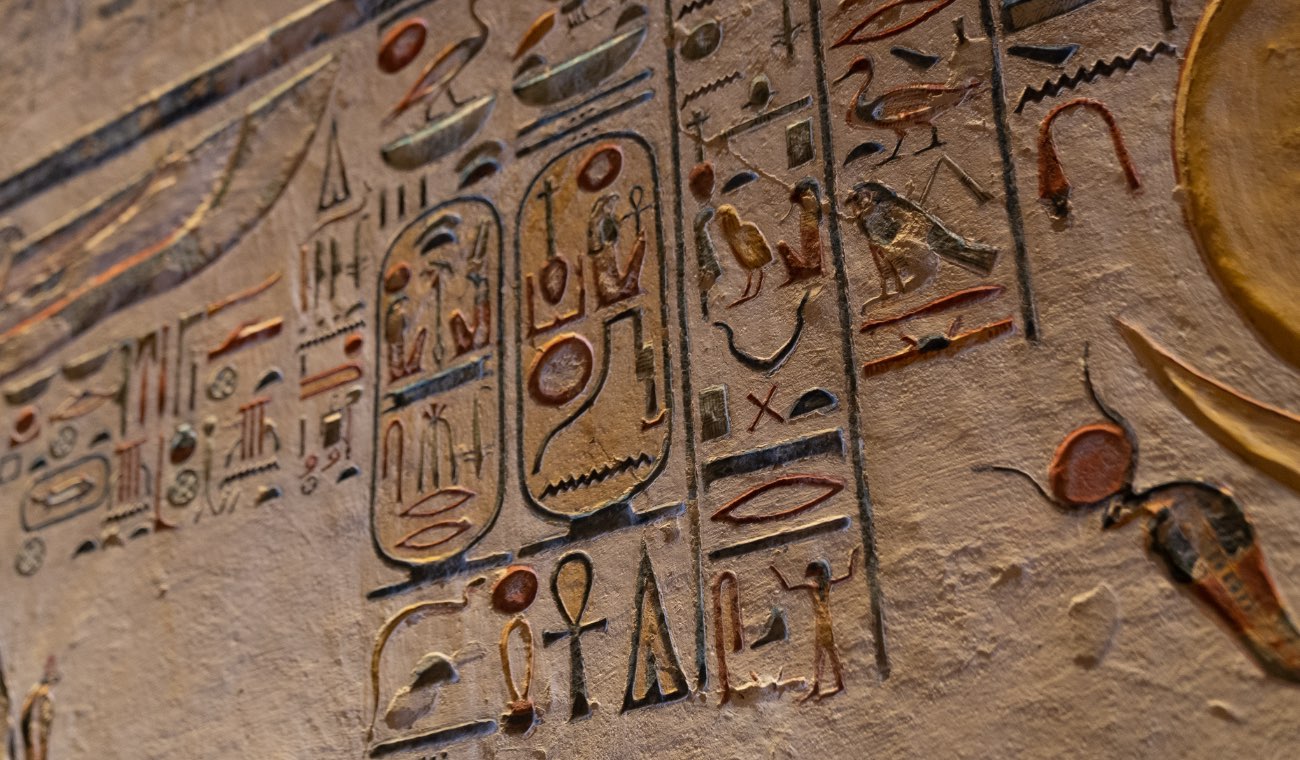
Visiting Karnak and Luxor Temples offered a remarkably complete picture of ancient Egyptian life.
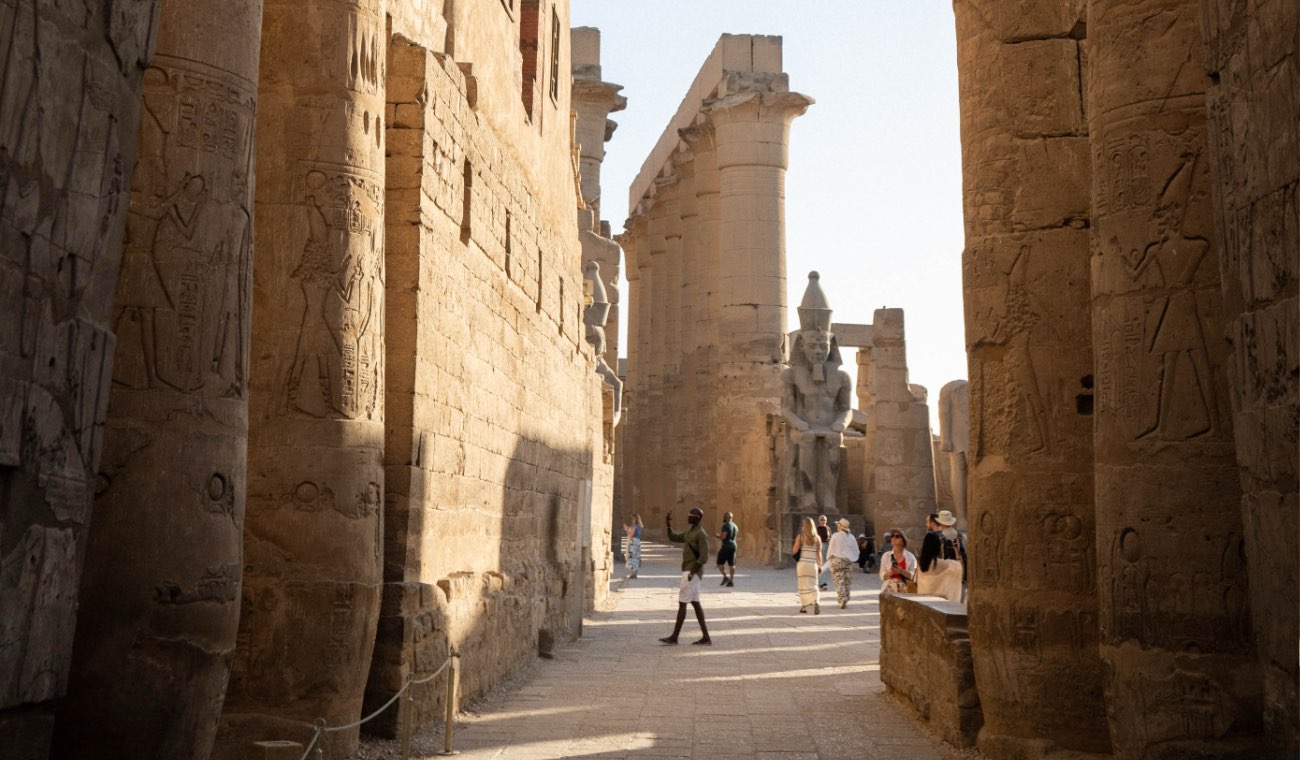
As Karnak Temple and Luxor Temple are located within a few miles of each other, we were able to visit both on the same day which provided a unique opportunity to experience how people moved between the two and what the sites represented. Karnak Temple was the formal home of state religion and royal propaganda and Luxor Temple was the public facing ceremonial side of the city connected to Karnak by the Avenue of Sphinxes (a 1.7 mile spiritual path lined with hundreds of sandstone sphinxes).
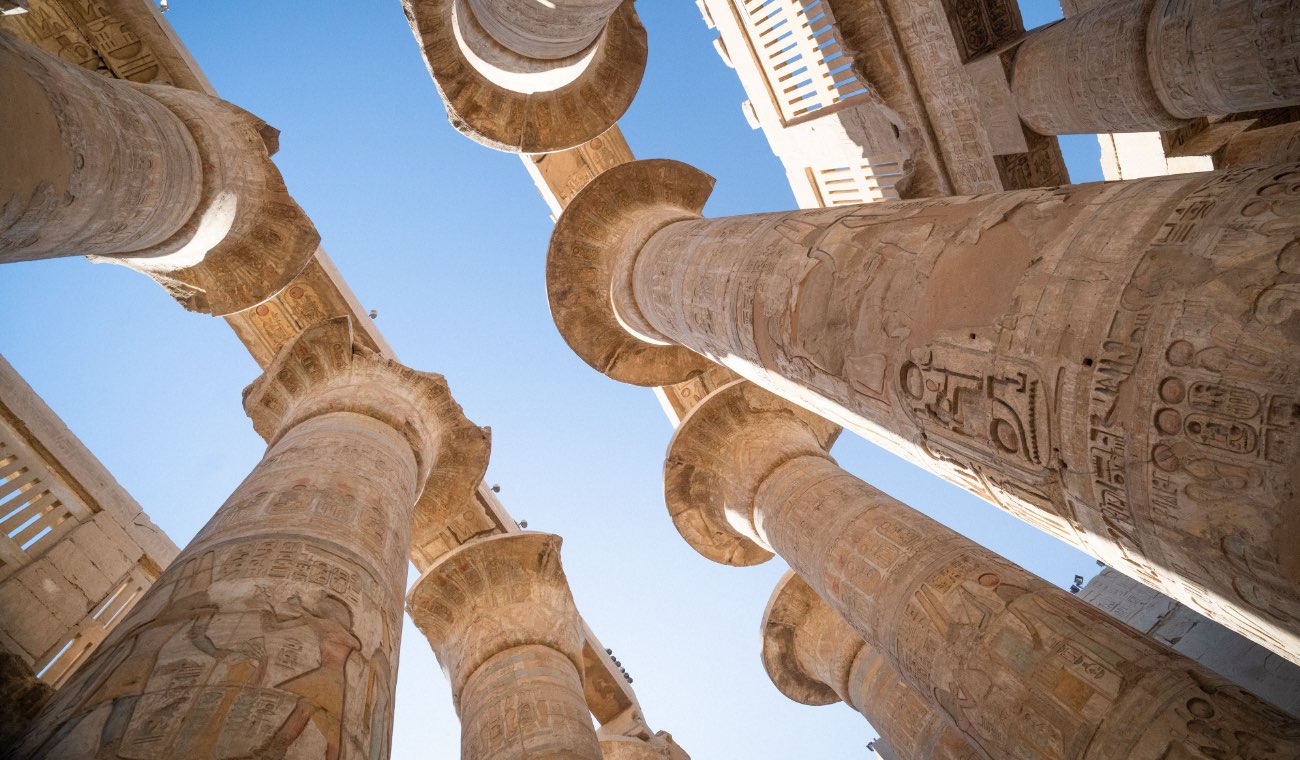
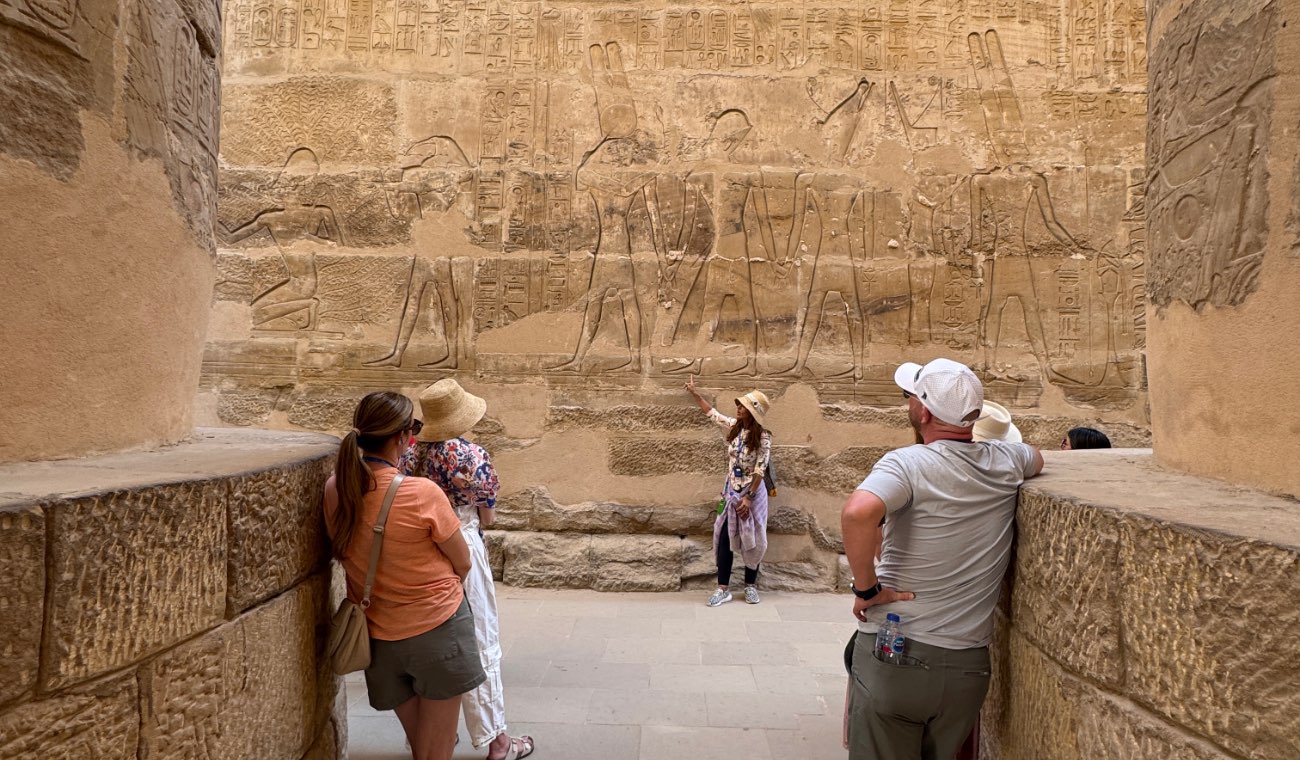
Arriving at Karnak Temple we were immediately taken back by its overwhelming size. The complex totals over 200 acres which was continuously developed over the span of 2,000 years. As new pharaohs came to power, they each left their mark at Karnak adding pylons, obelisks, and chapels. The Great Hypostyle Hall was the real showstopper: a forest of giant stone columns that makes you feel tiny in the best way. Everywhere you look are hieroglyphs, royal cartouches, and scenes of pharaohs offering to the gods.
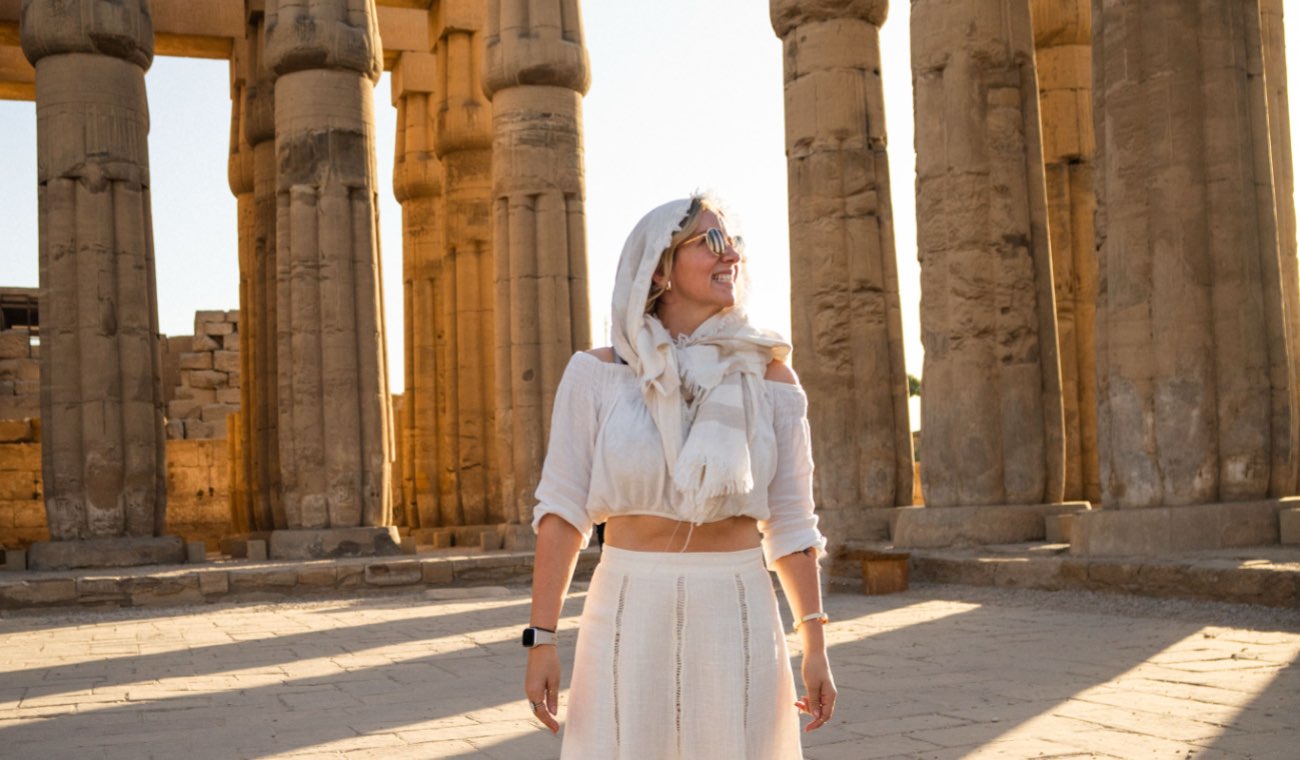
Luxor Temple felt more intimate and atmospheric than Karnak. Set right in the modern city along the Nile, the contrast between everyday life and this ancient monument is striking. We arrived just as the sun was beginning to set, lighting the temple and its columns in a way that created a beautiful, almost theatrical scene. The Temple was central to the Opet Festival, when statues of the gods were carried from Karnak to Luxor in a great procession. A highlight for me was being able to stand in the exact spot where the ceremonial route ended as I imagined the public celebration that once filled these static ruins.
Petra extended our journey into another spectacular ancient civilization.
Petra paired naturally with Egypt by giving our group a second, equally dramatic ancient world—this one carved directly into rose-red cliffs instead of built in stone on open desert. Egypt delivered pyramids, temples, and tombs, while Petra added canyons, a rock-cut city, and sweeping viewpoints reached only on foot through a winding, narrow gorge. Together, they felt like perfect wonders-of-the-world bookends to an epic journey through ancient civilizations.
Logistically, pairing the two was straightforward. A quick hour-long flight from Sharm El Sheikh to Aqaba brought us into Jordan for this short side trip. With just one full day in Petra, we still had plenty of time to walk the Siq (the winding gorge), see the Treasury, and explore tombs and panoramic viewpoints.
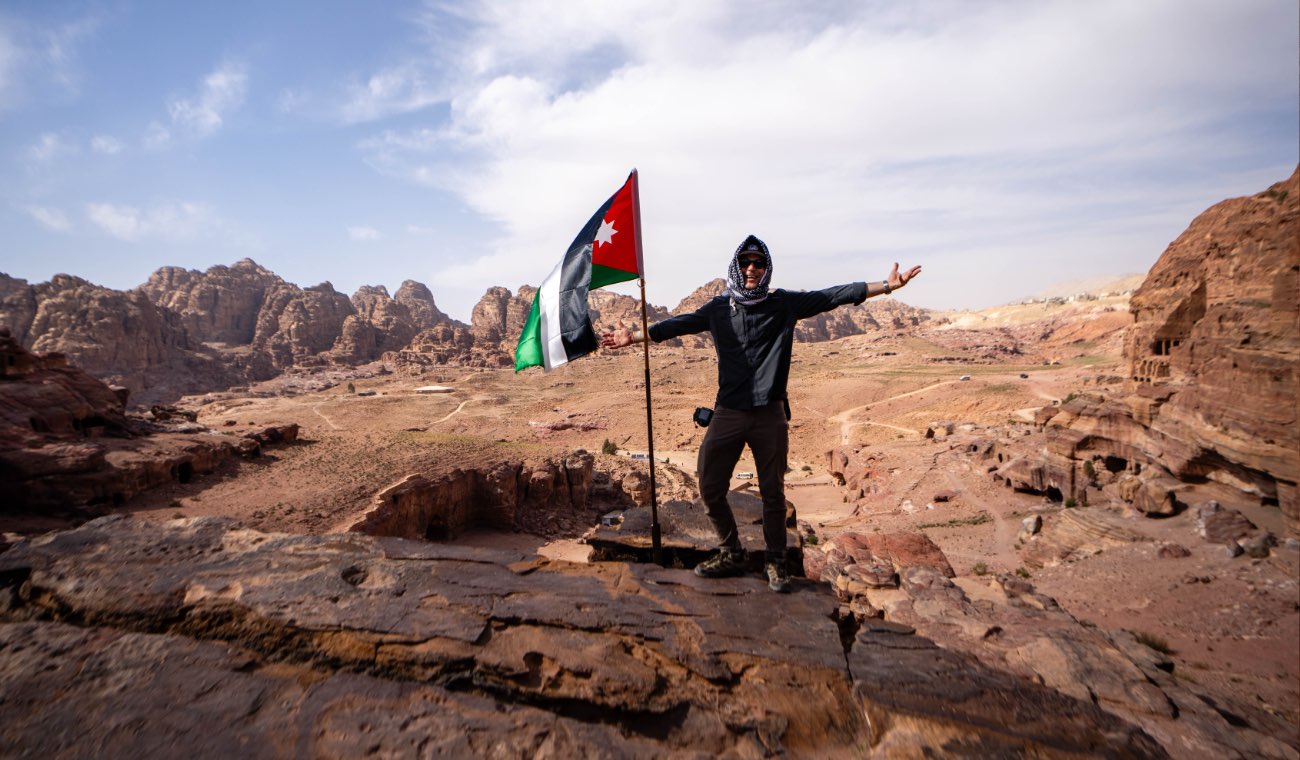
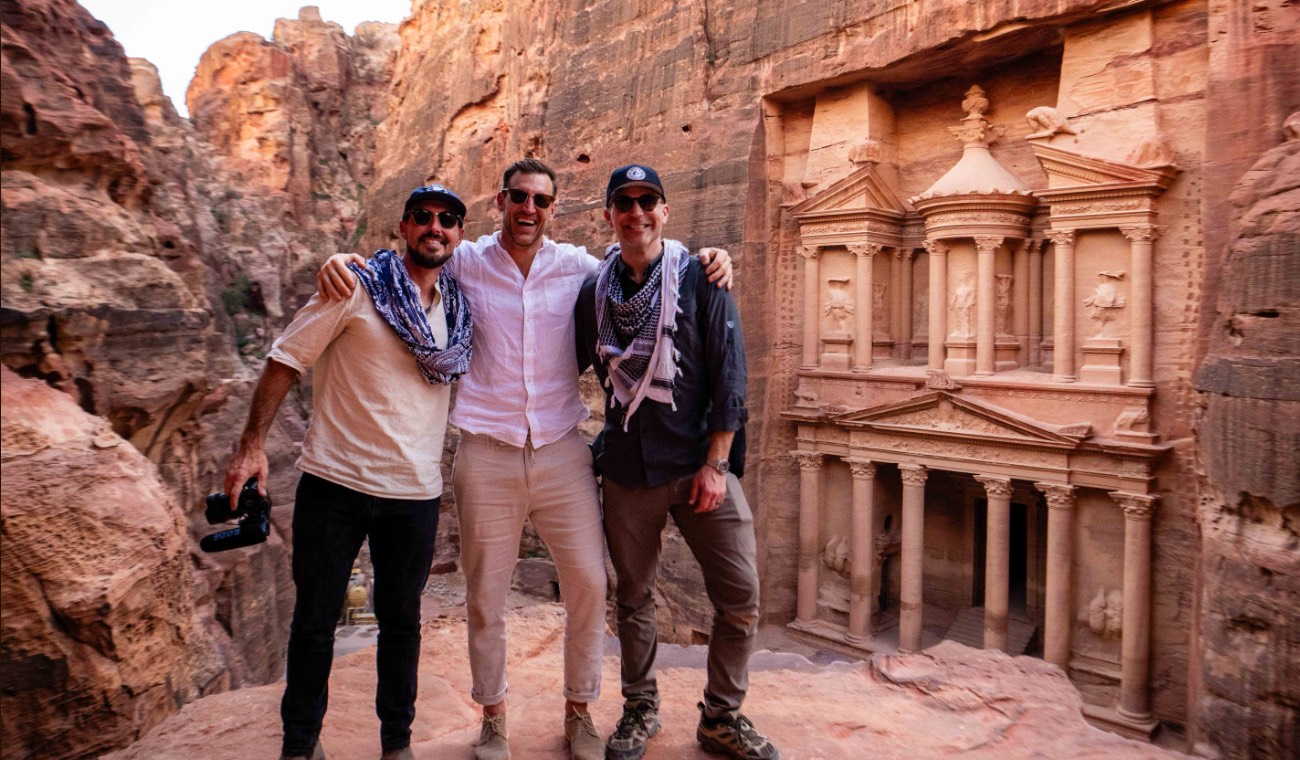
Just as with my first glimpse of the Pyramids and the Hypostyle Hall at Karnak, turning that final bend in the canyon and coming face-to-face with the Treasury is a travel moment I will carry for the rest of my life. Ever since I watched Indiana Jones and the Last Crusade as a kid, visiting Petra has been a dream, and it did not disappoint. It was a spectacular finale to an epic journey through two ancient worlds—and a powerful personal reminder to prioritize travel and seek out new cultures throughout my life.
I left Egypt and Jordan with more questions than answers, but instead of feeling frustrated, I felt energized. That sense of incompleteness didn’t close a chapter; it opened one. It sparked a deeper urge to learn, to read, and, ultimately, to return.
Where we stayed
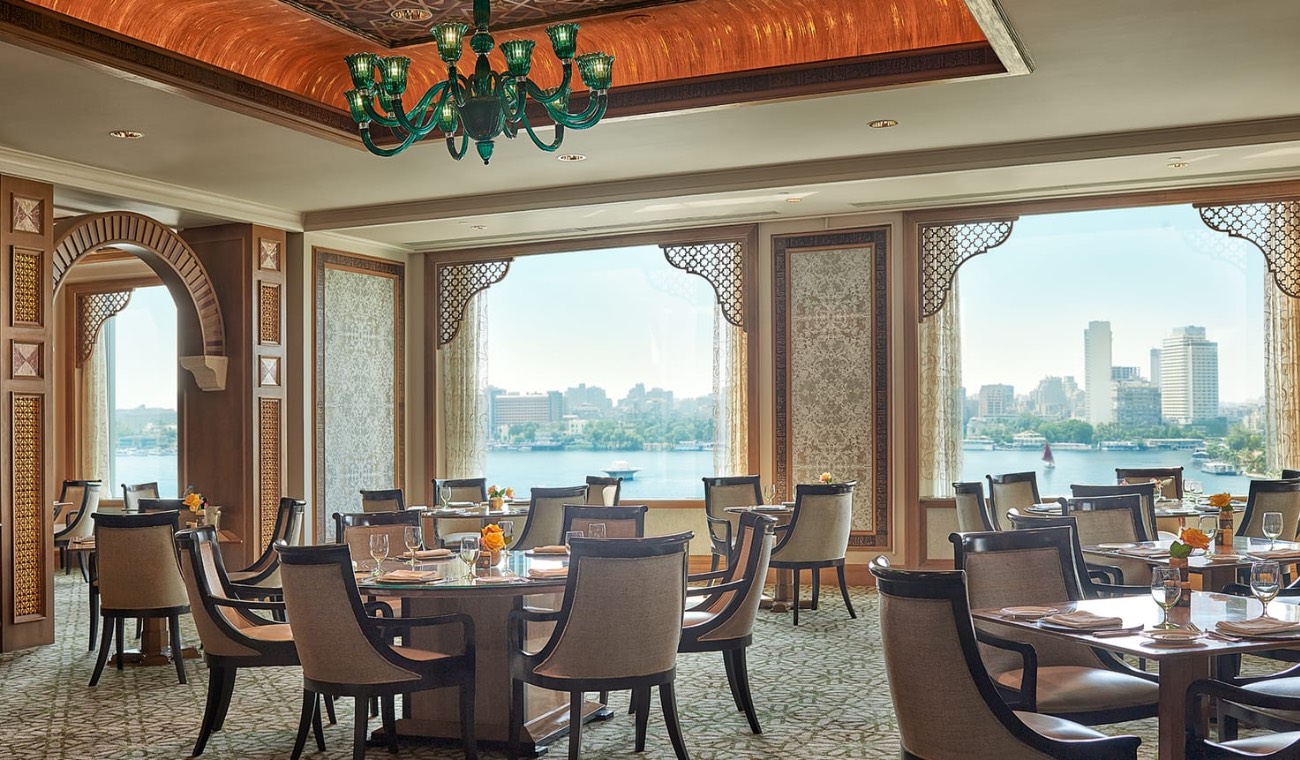
The Four Seasons Hotel Cairo at Nile Plaza: Set along the Nile in central Cairo, this property feels more like a polished city resort than a typical business hotel. You’ll find several standout restaurants, a serious spa, and rooms that mix modern comfort with subtle Egyptian touches rather than heavy themed decor. The location makes it easy to get to the main museums and historic sites, so it works just as well as a base for sightseeing as it does for a relaxed, high-end stay.
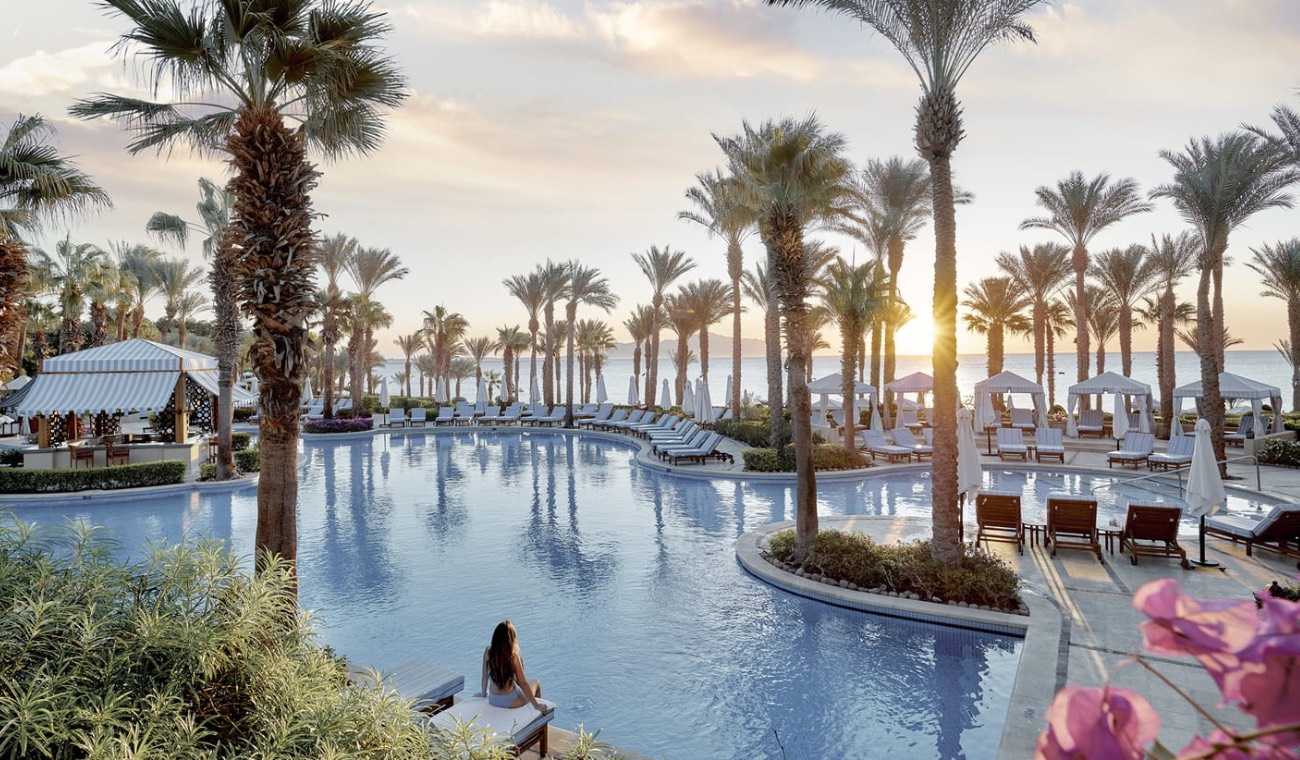
The Four Seasons Resort Sharm El Sheikh: Spread along the Red Sea coastline, this resort feels like a self-contained seaside escape. There are several pools tucked into the gardens, a long private beach, and enough quiet corners that you can decide whether the day is about doing everything or nothing at all. Food is a big part of the experience here, with multiple restaurants and bars, plus a spa that’s designed for lingering rather than rushing in and out.
If you’re into the water, the real star is just offshore: some of the best snorkeling and diving in the region are an easy boat ride away. If you’re not, it’s just as tempting to stay on land and watch the light change over the sea and mountains as the sun goes down.
Watch our adventure
You can click THIS LINK to watch our group adventure through Egypt and Jordan. Starting in Cairo with museums, bazaars, and mosques; then moving to Giza for rare private access inside the pyramids and at the Sphinx. We then flew to Luxor to explore the Valley of the Kings and exquisitely preserved tombs; and finally ended at the Lost City of Petra in Jordan.